Beyond the Sales Deck: How Honesty Accelerates Tech Alliances

The Strategic Imperative: Why Full Transparency on Your Strengths and Weaknesses Drives Partnership ROI
Many alliances falter because partners operate with a façade of perfection. The most impactful strategic alliances are built on a foundation of radical, documented honesty: being crystal clear on what you do well, and perhaps more importantly, what you don't.
If your alliance team is not actively articulating its own gaps, you are undermining the core value proposition of the entire partnership. This isn't about vulnerability; it's about strategic alignment and maximizing Return on Partnership Investment (ROPI).
Here is why operationalizing transparency around your capabilities is the single most critical step toward a successful strategic alliance:
1. The Whole Point is to Leverage Each Other’s Strengths
This is Alliance Partnerships 101. The reason you partner is to access a capability or market you cannot achieve independently. If you aren't honest about your current deficiencies (e.g., lack of European channel presence, weak mobile SDK documentation, or a bottleneck in customer support for a specific vertical), your partner cannot effectively deploy their resources to compensate. By defining your weaknesses as gaps to be filled, you immediately shift the conversation from a sales pitch to a co-creation strategy.
2. Radical Transparency Increases Trust and Reduces Friction
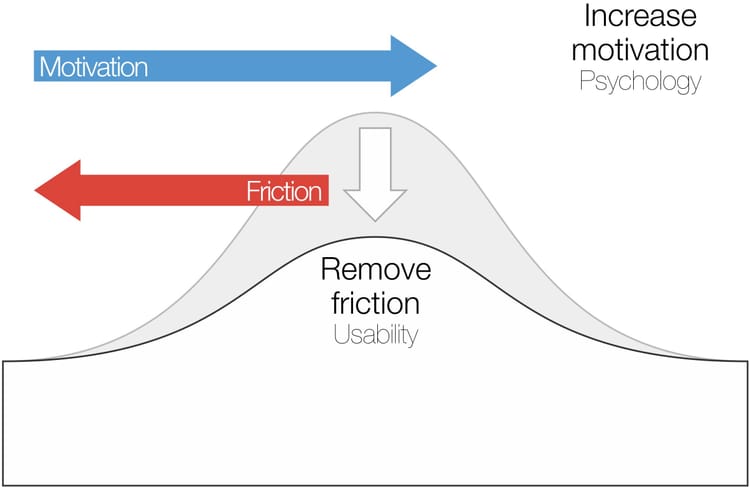
In the world of APIs and ecosystems, trust is the foundational currency. When you disclose weaknesses upfront—especially those that might impact integration or go-to-market execution—you signal long-term commitment and strategic maturity. This level of candor eliminates the need for your partner to "discover" your shortcomings through costly trial and error. This transparency creates an immediate psychological safety that dramatically accelerates joint initiatives, minimizing the Desire Minus Friction equation critical for scaling.
3. It Forces Alliance Teams to Understand This About Their Own Business
A partnership conversation is the ultimate stress test for your internal strategy. To effectively articulate your strengths and weaknesses to a high-value partner, your alliance team must first secure consensus on these points internally. This process inherently forces product, engineering, and sales teams to align on core competencies and operational gaps, ensuring that your partnership strategy is an honest reflection of your current business reality.
4. It Avoids Wasting Time on Projects with Low Probability of Success
If your partner excels at enterprise sales motions and your core weakness is SMB adoption, attempting to launch a co-branded SMB-focused project is a poor strategic choice. Clarity on capabilities acts as a filtering mechanism. By admitting a lack of resources in a certain area, you can quickly pivot away from vanity projects toward initiatives that leverage the combined 80% strength of both companies, ensuring that joint investment is focused purely on high-probability, high-impact outcomes.
5. It Opens Up Discussions to Be More Creative Together
When partners move past the surface-level discussion of "What can we integrate?" to "What fundamental customer problem can we solve by addressing both of our limitations?", true innovation happens. A weakness on one side might spark an entirely new product feature on the partner’s platform, or vice versa, creating a differentiated solution that neither company could have conceived in isolation.
6. It Highlights Precisely Where You May Need More Help
Clear-eyed self-assessment makes the partner's value proposition immediately visible. If you know your API is technically robust but your partner documentation is lagging (a critical weakness), then a partner who specializes in developer experience or technical enablement immediately steps forward as a strategic asset, not just a channel. This pinpoints the exact resources and investment required, moving quickly from ambiguity to actionable deployment.
Real-World Case Studies in Complementary Strengths
The most successful technology alliances thrive on this strategic division of labor:
- Microsoft (Platform) and SAS (Analytics): Microsoft, possessing one of the world’s leading cloud platforms (Azure), partnered with SAS, which possessed deep, industry-specific analytical expertise and proprietary tools. SAS migrated its complex analytics tools onto Azure. This partnership allowed Microsoft to instantly offer a deeper, enterprise-grade analytics capability on its cloud, while SAS gained a massive, scalable platform and efficient go-to-market channel—filling each other’s gaps in platform reach and analytics depth.
- Spotify (Content/UX) and Uber (Logistics/Context): This non-obvious partnership successfully combined two different strengths. Uber’s strength is in logistics and providing a captive context (a ride). Spotify’s strength is in music content and personalized user experience. By integrating Spotify Premium into the Uber ride experience, Uber provided a differentiated service that enhanced customer loyalty, and Spotify gained a new usage environment and a strong co-marketing narrative. The alliance leveraged Uber’s transportation platform and Spotify's audio API/content library.
These partnerships were successful because the alliance teams were clear on their respective domains. They didn't try to build each other’s strengths; they focused on combining what they did best to create a unified, superior offering.
The Mandate
Stop selling your perfect vision of your company to your partners. Start presenting your capabilities alongside your clear, defined operational needs. The path to maximizing partnership value is not paved with sales pitches—it is paved with strategic honesty. Be clear on your strengths, transparent about your weaknesses, and watch your strategic alliances become truly indispensable.
“Moral authority comes from following universal and timeless principles like honesty, integrity, treating people with respect.” - Stephen Covey
If you enjoyed this piece, please share it. Thanks. 🙏